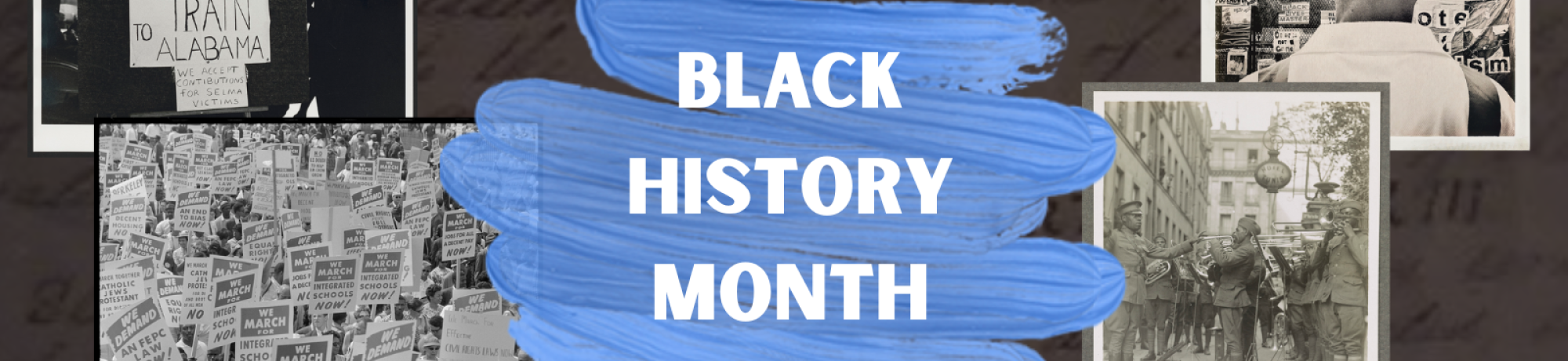
In 1949, President Harry Truman declared February 1 as National Freedom Day, commemorating the day in 1865 that Abraham Lincoln signed a resolution proposing a Constitutional amendment prohibiting slavery in the United States — what would become the Thirteenth Amendment. National Freedom Day was a precursor to Black History Day, and in 1976, President Gerald Ford formally recognized February as Black History Month.
This Resource Spotlight celebrates the history of freedom in the United States in tandem with Black History Month, recognizing that for many in this country’s history, freedom was not guaranteed. In celebrating 250 years of the United States this year, we encourage you to discuss the history of “freedom” and what it means to be “free” with your students. Here are some resources to get you started.
CHSSP Resource Spotlights:
Black History Month: This Resource Spotlight from 2025 includes a comprehensive list of all CHSSP Black History Month resource collections and blogs. It features inquiry sets on the Civil Rights Movement and the history of citizenship in the United States, along with other resources for educators, academic scholarship, and many excellent picture book recommendations.
And here are other Black History Month resource spotlights:
- Black History and Black Futures (2024)
- Black History Month Highlights (2023)
- February Monthly Highlights (2022)
Ready-to-Use Lesson Plans on Freedom:
Was the Civil War a War for Freedom?
This multi-part unit takes eighth-grade students through the Civil War, from the road leading up to secession to Emancipation and the war's end. Specifically, the unit addresses the causes of the Civil War and asks students to use primary sources to consider the question: Was the Civil War a war for freedom?
Why and How was the Cold War Fought?
This multi-part unit on the Cold War can be used in tenth-grade U.S. history classrooms or eleventh-grade World History classrooms. Students learn how countries struggled to define what freedom would mean for them following World War II. Included are lessons on global decolonization movements and the effect of the Cold War on the Civil Rights Movement domestically.
Reconstruction’s Impact on the Country
This eleventh-grade inquiry set illustrates many developments that set the stage for modern United States history. Reconstruction in the wake of the Civil War, rapid western expansion, industrialization, immigration, and increasing racism and nativism are necessary to understand the impact of the Civil War on the country at the end of the 19th century. Students learn how the lives of Black Americans changed rapidly as the country moved from Emancipation to Reconstruction to Jim Crow.
#KatesBookClub Reads:
Claudette Colvin: I Want Freedom Now! by Phillip Hoose, illustrated by Bea Jackson. When Claudette Colvin was fifteen, she refused to move to the back of the bus and give up her seat to a white person, resulting in her arrest. The incident occurred nine months before the more widely known experience of Rosa Parks, who was also arrested for refusing to give up her seat on a bus. Claudette was one of four plaintiffs in the first federal court case challenging bus segregation. Another excellent title to share with elementary students is Because Claudette by Tracey Baptiste. Students will enjoy hearing Claudette’s retelling of the event in this interview. Before Rosa Parks, There Was Claudette Colvin : NPR
Freedom Soup by Tami Charles, illustrated by Jacqueline Alcantara. Story of Belle, who learns to make traditional Haitian New Year’s soup, known as Soup Joumou, with her grandmother. A story of the Haitian Revolution, the book also celebrates heritage, freedom, family traditions, and multigenerational relationships. A unique way to honor history and family, the book would also be a great discussion starter for sharing family traditions. Don’t miss the recipe for soup in the back matter.
Game of Freedom: Mestre Bimba and the Art of Capoeira by Duncan Tonatiuh, illustrated by Duncan Tonatiuh. Biography of Mestre Bimba, a Brazilian martial artist who transformed the outlawed Afro-Brazilian art of capoeira into a respected cultural practice. Using lyrical prose and illustrations inspired by ancient codices, the story showcases Bimba’s resistance to racial oppression through art.
Mamie Tape Fights to Go to School: Based on a True Story by Traci Huahn, illustrated by Michelle Jing Chan. When Mamie wanted to go to school, she was turned away at the schoolhouse door as children of Chinese descent were not allowed to attend public schools in the 1880s. Mamie’s parents sued the San Francisco school board and won. The case, Tape v. Hurley, made its way to the California Supreme Court, which ruled that children of Chinese heritage had the right to a free public school education. Six years before Mendez v. Westminster, Mamie Tape’s story is one all California students should know.
Revolutionary Mary: The True Story of One Woman, the Declaration of Independence, and America’s Fight for Freedom by Karen Blumenthal and Jen McCartney, illustrated by Elizabeth Baddeley. Story of Mary Katharine Goddard, the only woman whose name appears on a printed copy of the Declaration of Independence. Mary ran her own printing shop in Baltimore during the Revolution, publishing critical news to New England patriots. Great example of a courageous woman during the early days of our nation. Click here for more information on Mary’s life.
We Want to Go to School!: The Fight for Disability Rights by Maryann Cocca-Leffler, illustrated by Janine Leffler. True story of the Mills v. Board of Education lawsuit, which fought for the right to public education for children with disabilities. Told from the perspective of Janine Leffler, one of the students involved, the book tells how seven families sued the school district of District of Columbia in 1971, leading to landmark laws ensuring that all children have the right to a free, appropriate public education.